
What you need
- A straight wall and level floor.
- A firm, reasonably large book.
- A tape measure or rigid rule.
- Ideally another person to read the measurement.
The method in three steps
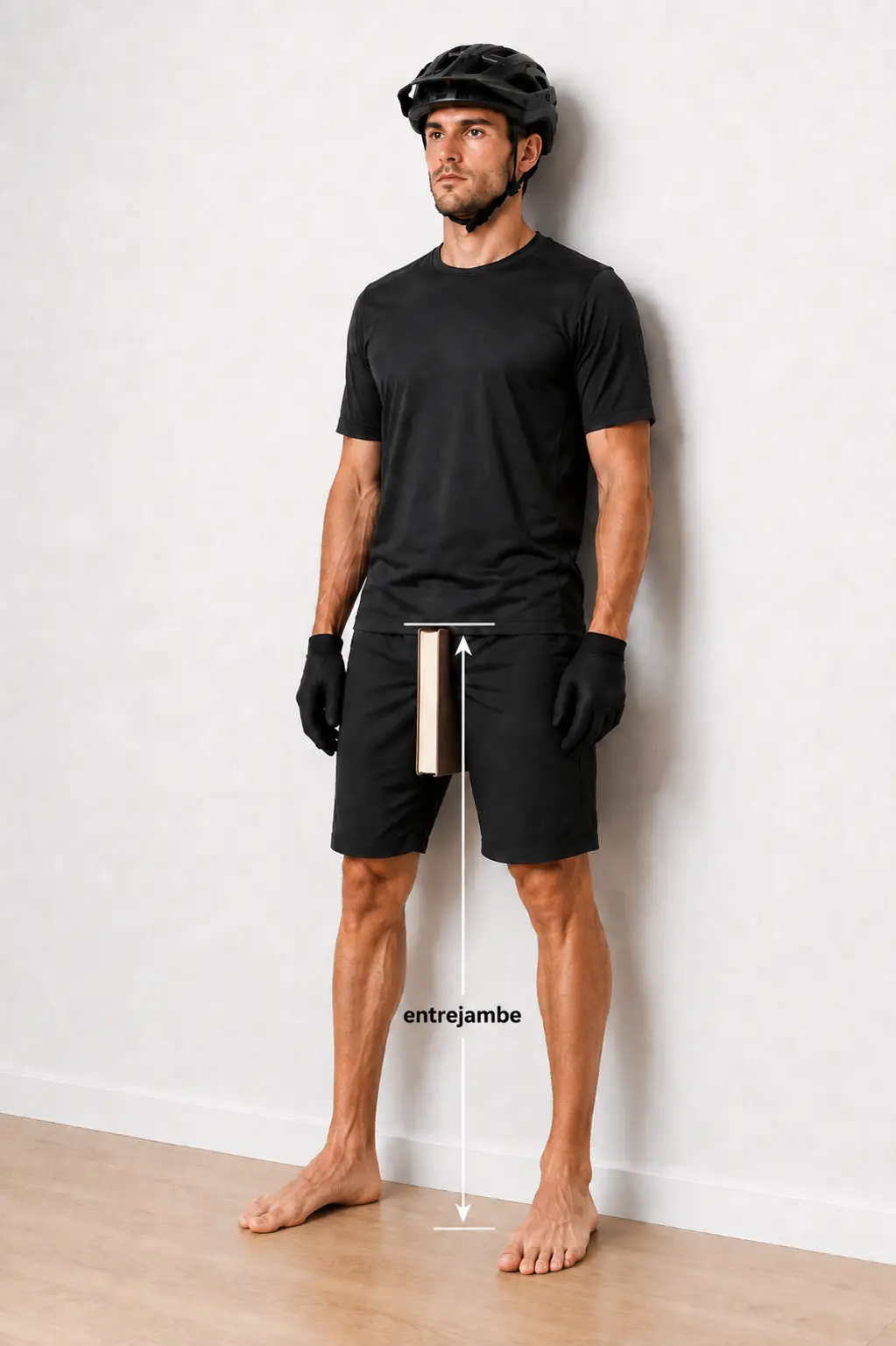
1. Stand straight
Remove your shoes, place your back against the wall and keep your feet parallel about fifteen centimetres apart. Look ahead and distribute weight evenly.
2. Position the book
Slide the book between your legs and raise it until the pressure resembles a saddle. Keep the upper edge at the highest contact point without standing on tiptoe.
3. Measure vertically
Measure from the floor to the top of the book. Keep the tape vertical, record to the nearest half-centimetre, relax and repeat.
Consistency check: two readings should be very close. If they differ by more than one centimetre, repeat with help.
Using the value
| Use | Indicative coefficient | Example at 82 cm |
|---|---|---|
| Road | × 0.66 | 54 cm |
| Gravel | × 0.66 | 54 cm |
| Mountain | × 0.59 | 48 cm / 19″ |
| City / trekking | × 0.65 | 53 cm |
| Saddle height | × 0.883 | 72.4 cm |
Common errors
- Keeping shoes or thick clothing on.
- Measuring along the leg rather than vertically.
- Tilting the book or applying too little pressure.
- Confusing body inseam with trouser inside leg.
- Treating the formula as a final answer without checking geometry.